Building new advantages through 'going global' and shaping a new ecosystem for automobiles to go global
Chinese new energy vehicles are gaining popularity in the global market —
In Southeast Asia, consumers in countries such as Thailand and Singapore are willing to wait in long queues to buy a popular Chinese new energy vehicle model.
In Europe, in May of this year, five Chinese automakers sold a total of 138,000 vehicles in 31 European countries, a year-on-year increase of over 64%. Chinese automakers surpassed Japanese automakers in monthly new car registrations in Europe for the first time.
In South America, Brazil has become the largest destination for China's new energy vehicle exports. In July of this year, BYD's Brazil plant produced its 100,000th new energy vehicle.
These vibrant scenes vividly capture how China's automobile industry is accelerating the building of a new development pattern: strengthening domestic circulation, optimizing the domestic-international dual circulation so that they reinforce each other, and making the best of both domestic and international markets and resources.
Looking at a longer timeline, data from the China Association of Automobile Manufacturers bears witness to the transformation of China's automotive globalization: 977,300 vehicles and 7.098 million vehicles — these were the export volumes of Chinese automobiles in 2013 and 2025 respectively, a more than sixfold increase.
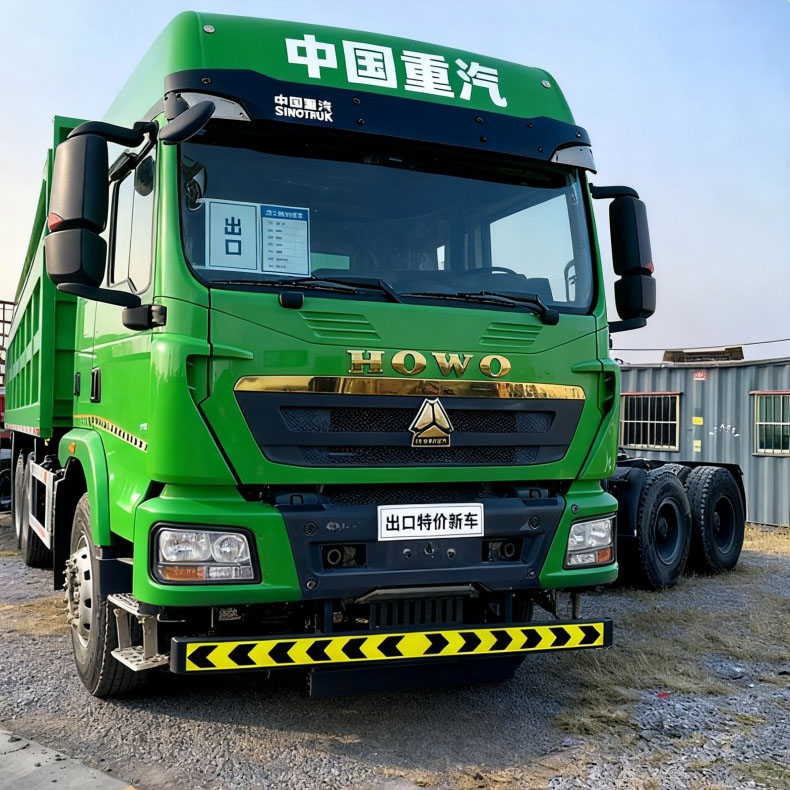
During the 14th Five-Year Plan period, China's automobile exports grew explosively, rising by roughly one million vehicles a year and successively crossing the 2 million, 3 million, 5 million, 6 million, and 7 million thresholds.
From January to July this year, China's automobile exports reached 6.14 million units, up 66.8% year-on-year. China has become the world's largest automobile exporter, thanks largely to the strong momentum of new energy vehicles.
From 2020 to 2025, exports of new energy vehicles rose from 69,000 to 2.615 million units, a more than 36-fold increase in five years.
In June of this year, China's monthly automobile exports exceeded 1 million units for the first time, up 75.1% year-on-year. Of these, new energy vehicle exports reached 523,000 units, a 1.6-fold year-on-year increase, accounting for more than 50% of the total.
Going global, Chinese new energy vehicle companies are racing ahead —
Chery, SAIC, and BYD, among the earliest automakers to enter overseas markets, have become leaders in going global with their scale advantages and technological moats.
Traditional automakers such as Geely, Changan, and Great Wall are accelerating their globalization strategies, relying on localized production and cross-border brand cooperation to expand overseas markets.
New forces in car making such as Xiaopeng, NIO, and Leapmotor are gradually opening up high-end overseas markets by leveraging their advantages in intelligent technology.
Behind the increase in quantity is a qualitative leap. What helps China's new energy vehicles "go global" is advanced production capacity and high-quality products.
Looking at the product structure, exports are mainly mid-to-high-end models that have been tested by domestic market competition, many of them brand flagships. On July 16 this year, Xiaopeng held the global launch event for the MONA L03 in Munich, Germany — a global model launched simultaneously in China and Europe.
In terms of terminal prices, models are generally priced higher than in the domestic market. The BYD ATTO 3 (domestically known as Yuan PLUS) starts at 120,000 yuan in China but is priced at over 300,000 yuan in Europe. The high-end Zeekr 001, benchmarked against traditional European luxury cars, is priced at over 70,000 euros.
In terms of brand reputation, Chinese new energy vehicles have become synonymous with "high-end, high-quality," completely breaking away from the past stereotype of "low-end, cheap" fuel vehicles.
The overseas success of new energy vehicles has driven the continuous reshaping of the "Made in China" brand value in the global market.
Along the way, China's new energy vehicles have achieved a triple leap in going global: from "whole-vehicle exports" to "the industrial chain going global," and then to "the ecosystem going global." The logic of going global is constantly evolving, and Chinese automakers are accelerating their move toward "systematic integration" covering production layout, technical standards, and brand output.
SAIC has built an overseas localized R&D, operations, and after-sales team. Its overseas sales reached 1.07 million vehicles in a single year, with cumulative overseas sales surpassing 6 million vehicles by 2025. The SAIC MG4 EV is popular among consumers in countries such as the UK, Germany, and Australia thanks to its striking exterior design and excellent driving dynamics. "We adhere to 'global thinking, localized action' and develop precise, differentiated plans based on regulations, road conditions, and consumption habits in different regions," said the group's leader.
Chery's business now covers over 130 countries and regions. South America has many mountains and slopes, and consumers have high expectations for vehicle power, so Chery engineers have optimized acceleration and climbing performance. There are many deserts in the Middle East, where sand particles may damage vehicle components, so engineers have specially strengthened the sealing of components. In late June of this year, a new production line was put into operation at a factory jointly operated by Chery and Spain's Evro Automobile Group.
Striving to become a co-builder and participant in the local new energy industry chain, BYD's exploration has been long-standing and in-depth. BYD is bringing its R&D, production, sales, service, supply chain, and even business model into Brazil. This not only covers the manufacturing of complete vehicles, electric buses, and truck chassis, but also includes comprehensive production capabilities such as processing lithium iron phosphate battery materials, and has nurtured many local suppliers. By 2027, BYD expects local suppliers to account for more than 50% of its procurement.
In traditional mature markets in Europe and America, overseas multinationals are actively introducing and adopting Chinese technological routes. Stellantis has partnered with Leapmotor on electric drive assembly and is in talks with Huawei and JAC to launch co-developed models bearing the Maserati badge, allowing Huawei's fully self-developed technology to enter a century-old European luxury brand system for the first time.
In July of this year, CATL and Octopus Energy, the UK's largest energy company, announced a joint venture to bring China's "Qiji battery swapping technology" to Europe and jointly build battery-swapping super hubs. The first batch of demonstration battery-swapping stations is planned for the UK next year. This marks another milestone in the ecosystem-driven internationalization of China's new energy vehicles.
Going global is never a smooth road. In recent years, the overseas policy environment has experienced severe fluctuations. In 2023, Türkiye imposed an additional 40% tariff on China's pure electric vehicles; in 2024, the European Union imposed countervailing duties of up to 35.3% on Chinese electric vehicles, while the United States imposed a 100% tariff on electric vehicles imported from China; and in 2026, Mexico imposed tariffs of up to 50% on passenger cars from countries without a free-trade agreement... Trade barriers, compliance costs, and cultural differences are each a challenge.
"Different regions will face different problems. This is a necessary stage for Chinese enterprises going global, a comprehensive test, and an opportunity to be tempered," said Luo Hao, Assistant General Manager of the Brand and Public Relations Department of BYD Group.
The reason Chinese new energy vehicle companies can achieve strong growth against headwinds is that their approach to going global has never been one-way market expansion or a zero-sum game, but rather mutual benefit and shared prosperity.
"Our philosophy is 'to contribute to local development wherever we go,' which not only creates jobs, cultivates talent, and brings tax revenue to the local area, but also raises the level of local industrial development," said Yin Tongyue, Chairman of Chery Automobile.
Changan is building a green, intelligent new energy vehicle base in Rayong, Thailand, integrating technologies such as photovoltaic power generation and reclaimed water reuse to achieve near-zero wastewater discharge and significantly reduce energy consumption per unit of output value.
Geely has invested in Proton, Malaysia's national brand, empowering it with technology, management, and supply-chain resources to turn losses into profits and revitalize the brand.
In going global, China's new energy vehicles have always upheld inclusive economic globalization, providing high-quality, cost-effective automotive products suited to the economic levels, living conditions, and purchasing power of people around the world, especially in the Global South.
In Rio de Janeiro, Brazil, office worker Lucas used to buy used cars, but has now switched to a Chinese new energy sedan that can nimbly navigate the narrow streets and alleys of Latin America's old cities, greatly easing the pressure of daily life thanks to extremely low charging costs.
In South Africa, Xie En, a roadside-assistance entrepreneur, saw several old vehicles frequently break down after years of heavy use. After switching to Chinese new energy vehicles, their excellent quality and stable performance completely solved his vehicle problems, and his business is running steadily.
According to data from the International Organization of Motor Vehicle Manufacturers (OICA), nearly 80% of the incremental growth potential in the global automotive market is concentrated in the Global South. With the first-mover advantage in electrification and intelligence, as well as the cost advantage of the entire industry chain, China's new energy vehicles not only bring the once-unattainable dream of car ownership to many ordinary families in the Global South, but also provide a green path for developing countries to move toward intelligent electric transportation.
Chinese automakers are striving to build world-class automobile enterprises.
At the end of 2025, China's automobile industry saw a series of "30 million" milestones: FAW-Volkswagen produced its 30 millionth vehicle, Changan Automobile produced the 30 millionth Chinese-brand car, and national automobile production and sales exceeded 31 million vehicles.
China Changan Automobile Group Co., Ltd., a new state-owned automobile enterprise established in Chongqing in July 2025, has released its "Hai Na Bai Chuan" plan, which sets out a new strategic positioning and the goal of building a world-class automobile group with global competitiveness and self-developed core technologies.
"We will first establish service centers, spare parts centers, and call centers to build a service system that takes root locally," said Jia Lishan, Vice General Manager of Changan Automobile. Changan plans to establish more than 1,000 sales and service outlets in Europe by 2030.
In 2025, BYD surpassed Tesla to become the world's best-selling pure electric vehicle maker. At the shareholders' meeting on June 9 this year, Wang Chuanfu, founder, chairman, and president of BYD, once again expressed his ambition to achieve true "global No. 1" scale within five years.
It is noteworthy that BYD's first overseas SkyRail opened in Brazil this year, and the company plans to build 6,000 flash-charging stations overseas by March next year.
SAIC Group President Jia Jianxu believes that the value proposition of Chinese cars going global has shifted from competing in the market to building a global industrial community.
"Each has its own beauty, and the fruits of the transformation of China's automotive industry benefit the world," said Liu Yan, chief expert at the China Automotive Strategy and Policy Research Center.
When more new energy vehicles flood roads around the world and intelligent connected mobility benefits more people in developing countries, the going-global of China's new energy vehicles will be not only a fruit of industrial development, but also a vivid footnote to the vision of green, low-carbon development and ecological civilization.