From Leading to Leading: The Evolution Logic of Sinotruk Heavy Trucks to Global Leadership
In the first half of 2026, China National Heavy Duty Truck Group sold a total of 189,000 heavy-duty trucks. After becoming the world's No. 1 heavy truck seller in 2025, the Group has now won the "double crown" in both domestic and global heavy truck sales, consolidating its position as the global industry leader.
Industry competition continues to intensify, and market cycle fluctuations have become the norm. How has China National Heavy Duty Truck Group maintained its world No. 1 position? It does not rely on short-term windfalls. As the crude, low-price infighting fades away, the twin-engine strategy of deep local cultivation and overseas expansion has become the core path to riding out the industry cycle — and this is precisely the underlying logic of the Group's sustained leadership.
But being "a leader" is only the first half; "leading the way" is the real goal. From product output to standards output, the Group is making a deeper leap in its global strategy.
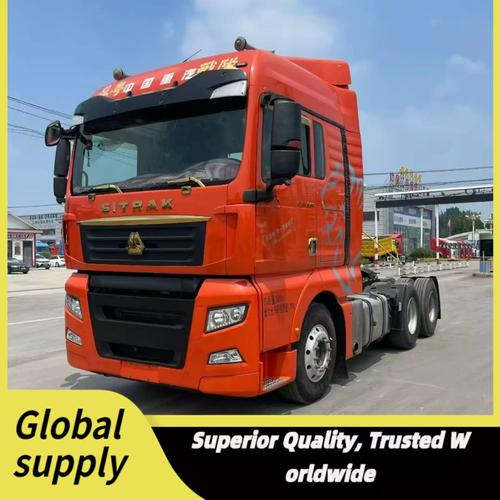
Building product moats and cementing a foundation of full-cycle value leadership
The stable performance of the domestic market is the solid foundation for the Group's industry leadership. In the first half of the year, the Group sold 189,000 heavy-duty trucks, up 27% year-on-year with a market share of 28.5%, and its segment advantages continued to strengthen.
Where does this leading advantage come from? During the 14th Five-Year Plan period, the Group's annual R&D investment exceeded 3 billion yuan. From engine thermal efficiency to vehicle drag coefficient, from electric drive axle efficiency to intelligent driving algorithms, every technical indicator has been repeatedly verified and continuously iterated in real operating scenarios.
In the era of stock competition, the criteria for users' vehicle-purchasing decisions have changed. Fleets and individual drivers are making increasingly rational decisions, abandoning a single-minded focus on low price and focusing instead on core indicators such as fuel consumption, vehicle reliability, maintenance costs, and used-vehicle residual value. These are the most tangible hard costs in users' day-to-day operations. The market reputation built by the Group's two main brands, SITRAK and HOWO, is essentially the result of long-term accumulation of operating data: lower fuel consumption, higher uptime, and more stable residual value, all of which ultimately translate into the most authentic vote from users.
Its counter-trend growth in the industry's off-season further confirms its solid product competitiveness. June is the traditional logistics off-season, and overall industry demand is flat. Even without policy incentives or large-scale promotions, the Group's monthly sales still reached 34,000 vehicles, up 37.1% year-on-year. This counter-trend performance is the market's rational choice based on product value, and it shows that product strength has become the core confidence for companies to ride out industry cycles and keep breaking through.
Globalization deepens: a systematic approach to going global takes the lead
The domestic market is becoming increasingly mature, and the industry is developing steadily. How can companies keep breaking through the growth ceiling? The core answer lies in deeply cultivating overseas markets and building a global system. As a leading domestic exporter of heavy-duty trucks, the Group exported 103,000 heavy-duty trucks in the first half of the year, up 46.5% year-on-year, accounting for 46.22% of the domestic industry's total exports. Its business covers more than 150 countries and regions. It has ranked first in domestic heavy-duty truck exports for 21 consecutive years, continuing to lead the industry's push overseas.
As a means of production, heavy-duty trucks depend heavily on long-term operation, after-sales support, and parts supply. Unlike simple product exports, China National Heavy Duty Truck Group (Sinotruk) adheres to systematic overseas expansion, with 37 KD assembly plants and more than 700 overseas service stations worldwide, completing the shift from vehicle exports to localized production, localized services, and full-chain empowerment. This system exports not only products, but also technical standards, management systems, and brand values.
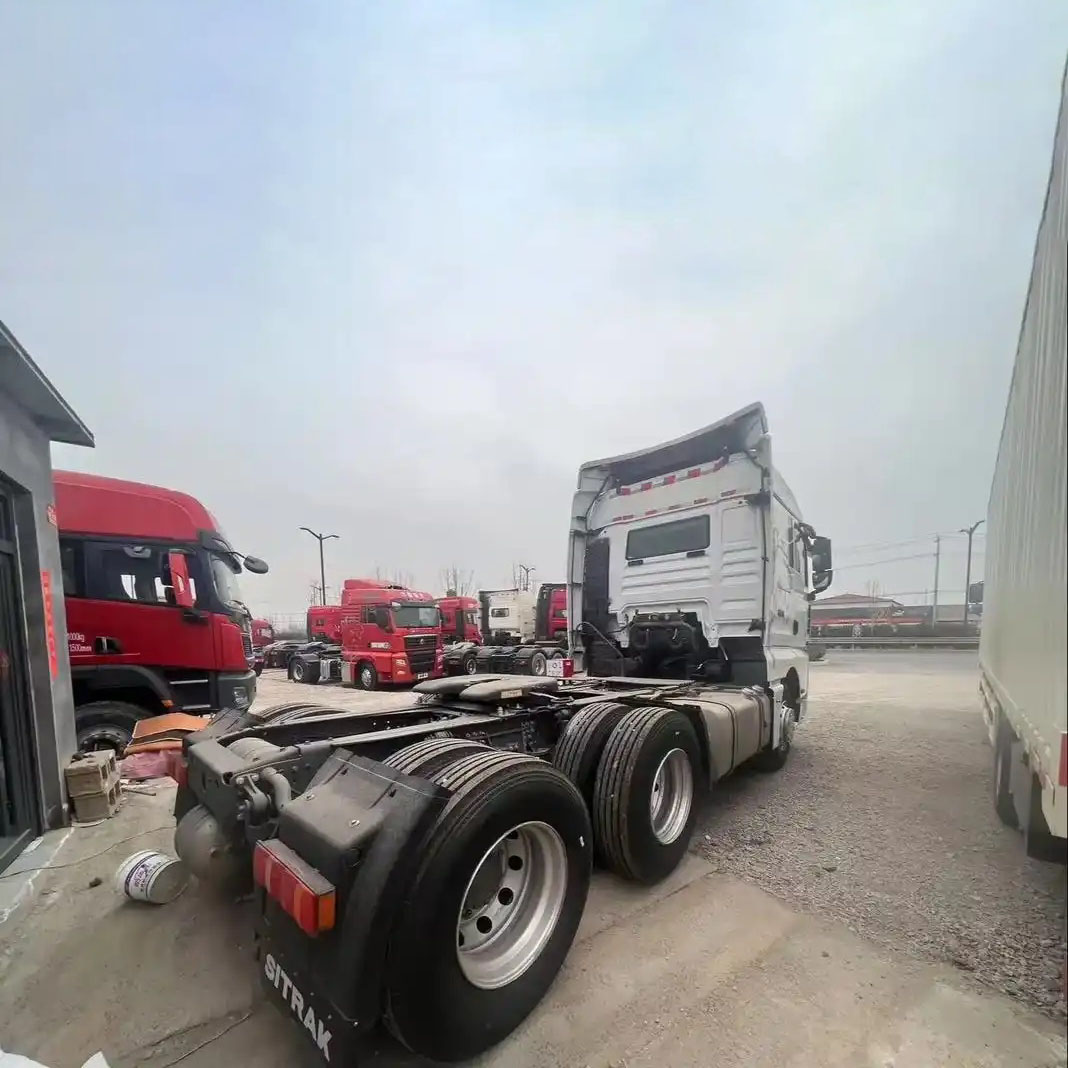
When Sinotruk's standards began to be applied in overseas factories and its service system took root in more than 150 markets, Chinese commercial vehicles had already moved from "products going global" to "standards going global" — this was the substantive leap from "leading" to "leading the way."
From claiming the top spot in the domestic heavy-duty truck industry in 2022, to becoming the global industry leader in 2025, and maintaining that top position in the first half of 2026, the Group has advanced steadily. Meanwhile, the year-on-year growth rate of its new energy business reached 141.3% in the first half of the year. The traditional business remains stable, the new energy track is accelerating its breakthroughs, and the global layout is deepening. A multidimensional development pattern is already taking shape.
When the standards of a Chinese company begin to be accepted by overseas markets, and the presence of "Made in China" takes a seat at the core table of global heavy truck competition, this reshaping of the industrial landscape has only just begun. From leading to leading the way, from product output to standards output — Sinotruk's exploration is setting a new benchmark for the global commercial vehicle industry.