China's commercial vehicles go abroad to accelerate, electric heavy-duty trucks open up new growth space
The export of commercial vehicles is rapidly increasing, and electric heavy-duty trucks are opening a new growth window
Chinese commercial vehicle exports are entering the "fast lane." According to data from the China Association of Automobile Manufacturers, the export volume of commercial vehicles reached 785,000 units from January to July this year, a year-on-year increase of 36.1%. The annual export volume of commercial vehicles is expected to hit 1.5 million units. Of these, electric heavy-duty trucks are becoming a new growth driver.
Experts believe that, relying on a complete industrial chain, leading technological strength, and the release of global policy dividends, electric heavy-duty trucks are expected to break the traditional industrial pattern and, with significant cost and operational advantages, deeply cultivate overseas markets, opening a new chapter in the globalization of China's commercial vehicle electrification.
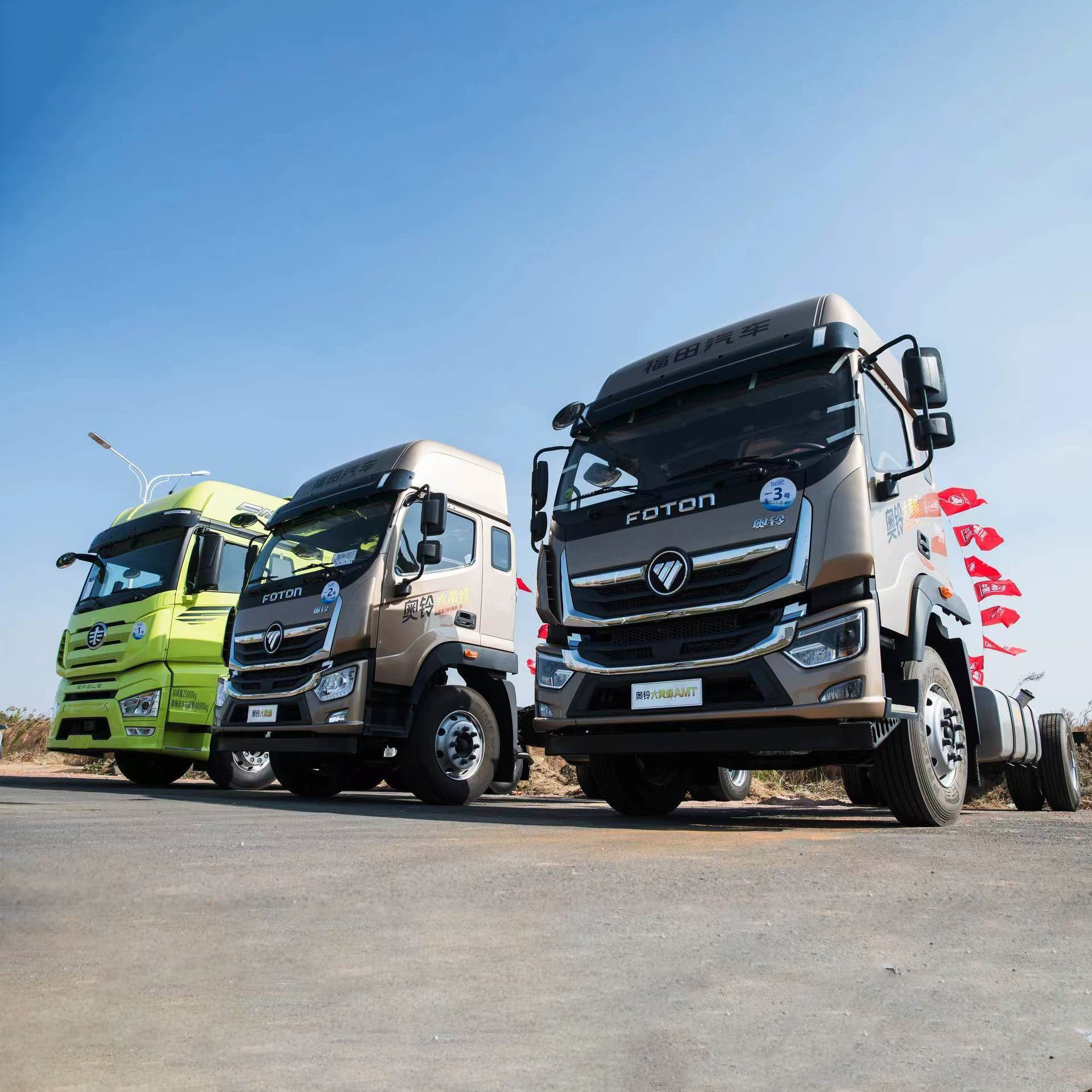
Chinese commercial vehicle exports are entering the "fast lane." According to data from the China Association of Automobile Manufacturers, from January to July 2026, cumulative exports of commercial vehicles reached 785,000 units, a year-on-year increase of 36.1%; among them, 121,000 vehicles were exported in July, a significant increase of 59.6% year-on-year. A total of 686,000 trucks were exported, a year-on-year increase of 38.7%, making trucks the absolute mainstay.
Heavy trucks, as the "ballast stone" of commercial vehicle exports, are growing even faster. According to data from the General Administration of Customs cited by Open Source Securities, in the first half of 2026, domestic heavy-duty truck exports to Africa, Southeast Asia, and Latin America reached 95,000, 50,000, and 17,000 units respectively, up 75.0%, 32.9%, and 69.5% year-on-year, with the three regions accounting for over 80% of the total export volume.
It is worth mentioning that new energy heavy-duty trucks are opening up new opportunities for Chinese vehicle makers.
In June of this year, 883 Sany electric heavy-duty trucks set sail from Changsha, setting a record for the single largest export batch of China's new-energy truck tractors and surpassing the total export volume of the same category for the whole of last year.
At the recent Global New Energy Vehicle Cooperation and Development Forum (GNEV2026), experts stated that this year's energy crisis has brought huge opportunities for electric heavy-duty trucks, and more and more people are willing to try them.
Experts attending the meeting noted that the current global electric heavy-duty truck market is showing a trend of China leading while overseas markets remain in the early stages of development. By the numbers, China accounts for over 90% of global electric heavy-duty truck sales. The penetration rate of electric heavy-duty trucks in China exceeds 40%, while in EU countries it is currently only about 2.4%, in Japan and the UK it is only 1%, and in most other countries it is less than 1%. There is a huge gap between product strength and market maturity. China's electric heavy-duty truck technology has taken a significant lead, while overseas markets are still dominated by fuel-powered heavy-duty trucks, making electric heavy-duty trucks an emerging product category.
Song Zhaohuan, Vice President and Chief Brand Officer of Geely Remote New Energy Commercial Vehicle Group, said, "Compared with the passenger car sector, the overall pace of new energy transformation in global commercial vehicles is still relatively slow. There is huge incremental room in vast markets such as Europe, Southeast Asia, the Middle East, and Latin America, and the industry has sufficient long-term development potential. Chinese new energy commercial vehicle enterprises are entering a rare strategic window period."
At the same time, global policy dividends are being unleashed. Liu Fengfeng, General Manager of Sany Heavy Truck Overseas Marketing Company, noted that by 2030, the European Union will mandate a 45% reduction in emissions for heavy trucks, creating an annual market of over 60,000 new vehicles. The exemption of road tolls for zero-emission heavy trucks will continue until 2031. The highest federal tax credit in North America is $40,000, and California has mandated 100% zero-emission heavy-duty trucks by 2036. Japan and South Korea continue to provide purchase subsidies, while favorable policies in Latin America, the Middle East, and Africa align with the demand for vehicle replacement.
Multiple advantages enhance the global leading position of domestic electric heavy-duty trucks
"In the era of fuel vehicles, Volvo firmly holds the top spot in Europe, Daimler dominates in the United States, and Japanese automakers have been expanding in Southeast Asia for many years. In each region, there are leading companies that have been deeply rooted for years. However, no brand from any country has been able to truly break down regional barriers and dominate the market," said Liang Linhe, director of Sany Group.
He stated that "electrification" has brought all brands onto the same track, and Chinese companies are at the forefront of the global electric heavy-duty truck race.
At the technical level, China has the highest battery energy density, motor power, and electronic control power density in the world. At the cost level, the entire Chinese electric heavy-duty truck industry chain has entered the stage of large-scale production. Products of the same class in Europe and America may still incur losses at a price of 300,000 euros, while Chinese products priced at $250,000 have considerable profit margins. In terms of reliability, Chinese products have undergone repeated iterations in extreme environments such as high temperature, extreme cold, and high humidity, and have entered mass production, while Europe is still in the stage of small-scale trial production.
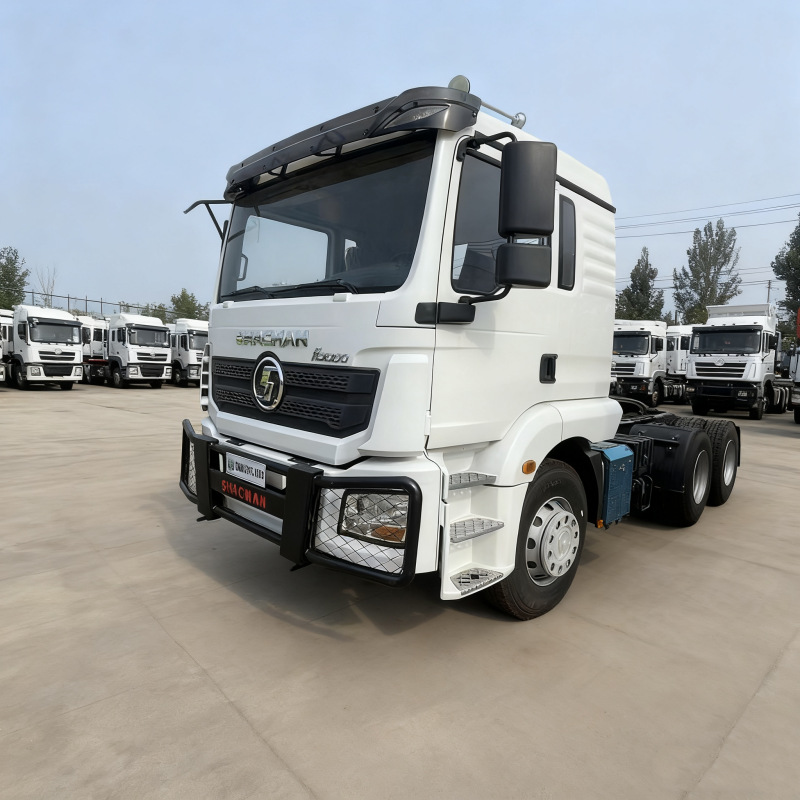
Even more noteworthy is the standard-setting power of electric heavy-duty trucks. Liang Linhe revealed that in 2023, Sany became the first electric heavy-duty truck brand to enter Singapore, deeply participating in the formulation of local battery-swapping standards. Now, this technology solution has become the core benchmark of the local battery-swapping system. "In the era of fuel vehicles, we were standard followers; in the era of new energy, we have the most mature technology and the richest real-world validation, and China's solutions should be promoted globally."
From the customer's perspective, the opportunity comes down to economics. Taking an annual mileage of 100,000 kilometers for heavy-duty trucks as the basis of calculation, and using Indonesia as an example, customers operating Sany 588 kWh electric heavy-duty trucks can, according to a five-year life-cycle calculation, achieve cumulative cost savings exceeding 700,000 yuan, with a payback period of only 11 months for purchasing a truck. Choosing an electric heavy-duty truck is not just about paying for environmental protection—it is about paying for profits.